How to Plan Pull-Out Kitchen Bins Before Ordering Cabinets
Choose a pull-out kitchen bin around waste sorting, usable cabinet space, cleaning access and the way you prepare food.
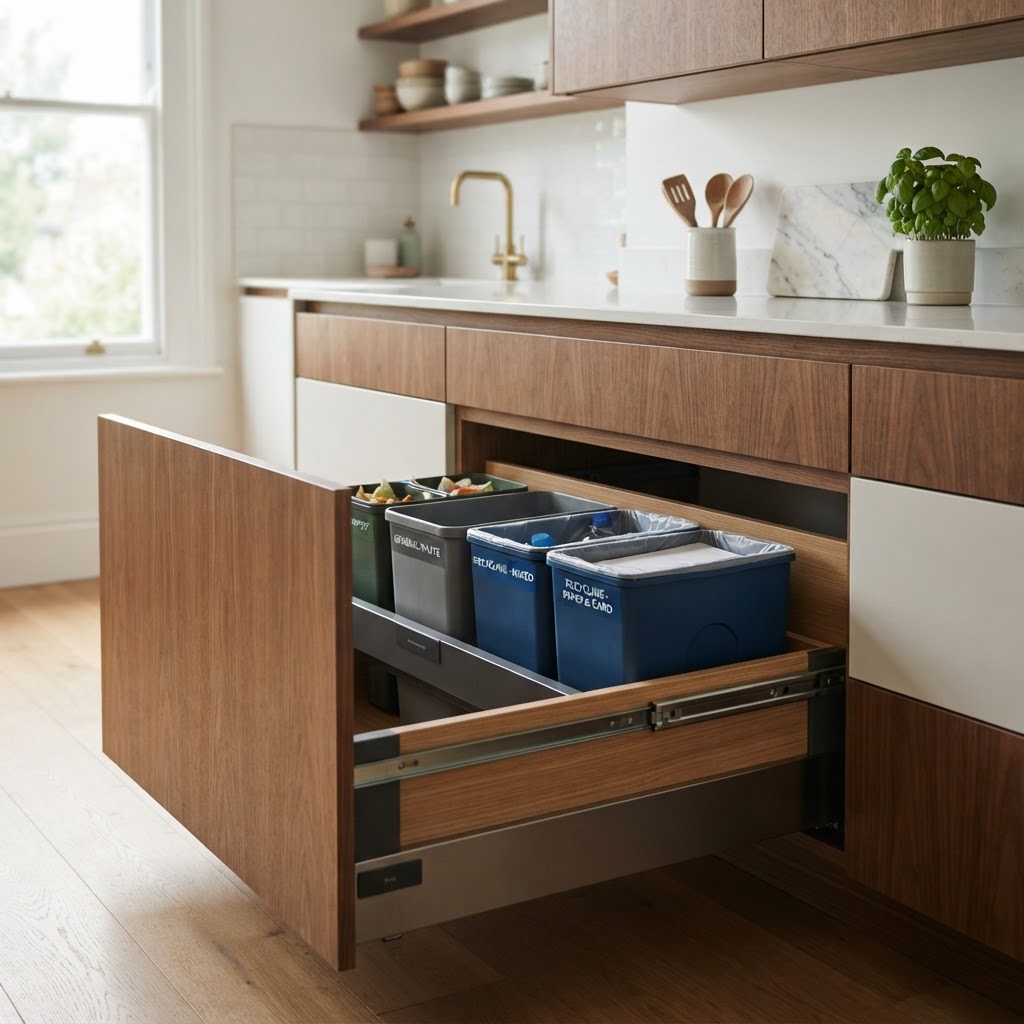
Start with the waste you actually separate
Before choosing a fitting, list the waste streams your household uses: general waste, recycling and food waste where applicable. Check your local authority's current collection guidance rather than assuming all materials can go in one compartment. A visually tidy cabinet will be frustrating if it does not match the sorting routine.
Observe a normal week. Which container fills first, who empties it and where are replacement bags kept? You do not need exact statistics; a simple note on overflow, odours and awkward access gives the supplier a more useful brief than a request for the largest bin.
Locate it along the preparation route
Consider where packaging is opened, vegetables are prepared and dishes are cleared. Sketch the journey between those tasks and the bin. A convenient position may reduce carrying scraps across the kitchen, but placing it where an open pull-out blocks the sink or main walkway can create a different problem.
Test the layout with another person in the room. Imagine one person preparing food while someone else sorts recycling. Record which openings collide and whether the bin remains reachable without interrupting an appliance door. This is a practical movement exercise, not a rule that every bin must sit beside the sink.
Check usable dimensions, not only cabinet width
Ask the supplier for the fitting's required internal width, depth and height, including the frame, runners and mounting method. Pipes, hinges, drawer boxes and a sink bowl may reduce space inside a nominally suitable cabinet. Compare the manufacturer's drawing with the actual cabinet construction.
Confirm the full extension and lid movement. Check whether the containers lift out easily and whether a loaded compartment can be removed without tilting it around plumbing. Keep unresolved measurements on the brief until the responsible supplier has completed the final survey.
Make emptying and cleaning part of the specification
Compare removable containers, accessible corners, replaceable lids and the ability to wipe the cabinet beneath the mechanism. Ask how the chosen fitting is serviced if a runner or handle needs replacement. A large capacity is less helpful when the container is difficult for the person emptying it to lift.
Check bag sizes, container shape and the route to the outside collection point. Households with different reach or mobility needs should test the movement with the intended users. Do not assume an automatic opening mechanism makes every arrangement accessible.
Compare quotes on the same fitting brief
Request the fitting model, number of containers, capacity stated by its manufacturer, cabinet specification, front-panel attachment and installation scope. Ask whether liners or other accessories are included. Keep product price separate from cabinet adaptation and fitting so proposals are comparable.
For example, a two-container pull-out near the preparation area and a separate food-waste container may suit one household better than three small compartments under a crowded sink. Treat that as an option to discuss, not a universal recommendation. Measure Design helps communicate a concept; final manufacture and installation still need verification.
Frequently asked questions
Can a pull-out bin go under any sink? No. The sink, pipework and mechanism must fit together with usable access.
Should I choose the biggest capacity available? Compare sorting, emptying weight and cabinet space first.
Can an AI concept confirm fitting compatibility? No. Use the chosen fitting's documentation and a verified cabinet survey.