Plan a Fitted Wardrobe Around What You Own

Turn your room measurements and storage needs into a clearer wardrobe brief, from hanging space and drawers to shoes, lighting and door choices.

3 free AI designs · No credit card required

How can I fit more hanging space and shoe storage?

Separate long garments from shirts and jackets, count your shoes, and reserve drawers for items that need them. Compare double hanging for shorter clothing with a full-height section for coats and dresses; check the actual garments rather than assuming a standard rail height.

Illustrative brief: two people share a wardrobe, one needs long hanging, and both need daily shoe access. Give each person a storage zone, keep everyday shoes low and accessible, and place seasonal items above. Check shoe length, shelf depth, drawer travel and door access before deciding the internal layout.

Use your own inventory and a professional measured survey to confirm what fits. This is a planning example, not a completed customer installation.
Start with an inventory, not a photograph

A fitted wardrobe works when the internal storage matches the household. Count long garments, shirts, folded clothing, shoes, bags and accessories. Note which items need daily access and which can sit on higher seasonal shelves.

Measure Design helps you turn those choices into a wardrobe concept. It is a planning tool, not a substitute for a technical survey or final manufacturing drawings.

Explore your wardrobe storage ideas in a room concept - start designing free.

Choose storage by item type

  • •Double-hanging rails for shorter garments where vertical space allows
  • •A full-length hanging section for dresses, coats and longer clothing
  • •Adjustable shelving and deep drawers for folded items
  • •Pull-out shoe racks, trouser racks, valet rods and accessory organisers
  • •High-level shelving for suitcases and seasonal storage
  • •A laundry hamper or dedicated zones where they suit the available space

Illustrated fitted wardrobe features

AI-generated concept images for planning.

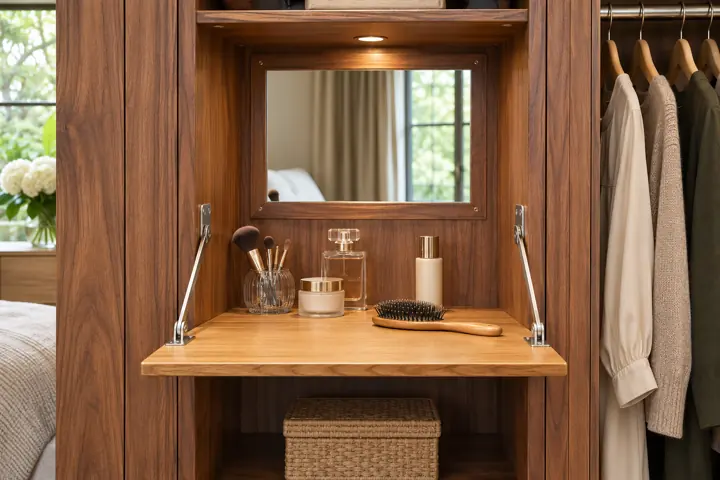
An open fold-down shelf with support stays and a mirror inside a walnut wardrobe bay.

Fold-Down Dressing Shelf

Open a compact dressing surface within a wardrobe bay and fold it away after use.

Confirm the open projection, support rating and fixing points. Allow space for the doors and shelf to open without meeting the bed or an adjacent drawer.

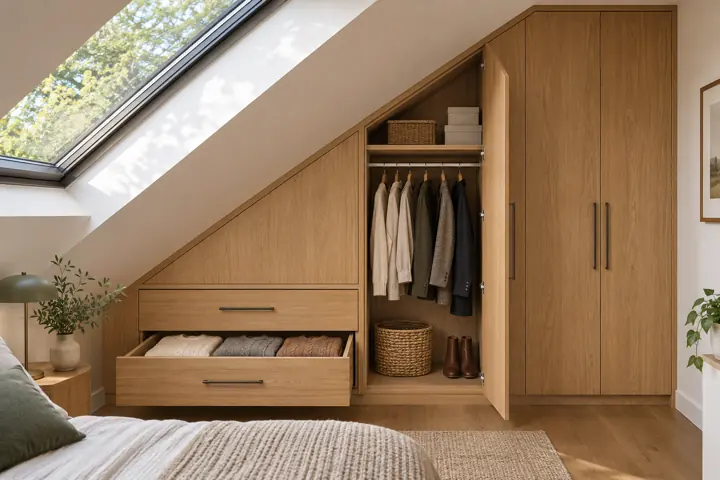
An oak wardrobe under a sloping ceiling with low drawers and a taller hanging bay.

Under-Eaves Wardrobe Storage

Fit low drawers or shelves beneath a sloping ceiling and reserve taller space for hanging.

Measure ceiling heights along the full run and check the depth available at each point. Confirm drawer travel, door swings and access to any services behind the units.

Plan doors, lighting and access together

Sliding doors save door-swing space but restrict how much of the wardrobe is open at once. Hinged doors need clear floor space but can provide wider simultaneous access. Internal LED or motion-sensor lighting can improve visibility, provided the electrical route and heat management are properly specified.

Pull-down rails and easy-access drawers may help users with different reach requirements. Discuss the user’s needs with the designer or installer instead of assuming a standard height will work for everyone.

Measurements a professional should verify

  • •Width and height at several points because walls, floors and ceilings may not be square
  • •Skirting boards, cornices, sockets, switches, radiators and service routes
  • •Door and window openings, handles and the circulation space around the bed
  • •Wall construction and suitable fixing points
  • •Installation access, tolerances and any filler panels required

Continue planning

Related planning guides

Ready to organise your wardrobe?

Prepare a visual storage brief, compare options and arrange a professional survey before manufacture or installation.

Start Your Wardrobe Design

Ready to design your kitchen? Start free - no credit card required.

Upload your photo and start designing

Optional analytics cookies help us understand public-page visits. No form contents are sent. Change your choice using Analytics settings.